“Turn every data into action.
Turn every action into data.
Turn every result into insight.
Turn every insight into better decisions.“ Medicon’s moto
Quality Management System Articles, Updates & Insights
“Turn every data into action.
Turn every action into data.
Turn every result into insight.
Turn every insight into better decisions.“ Medicon’s moto
“When you have some data, share it or you will kill it.“ Medicon’s moto
Data is a measurement of something.
Information is data placed into context.
Information when rightly managed becomes a knowledge.
Knowledge creates opportunities to become better and more successful.
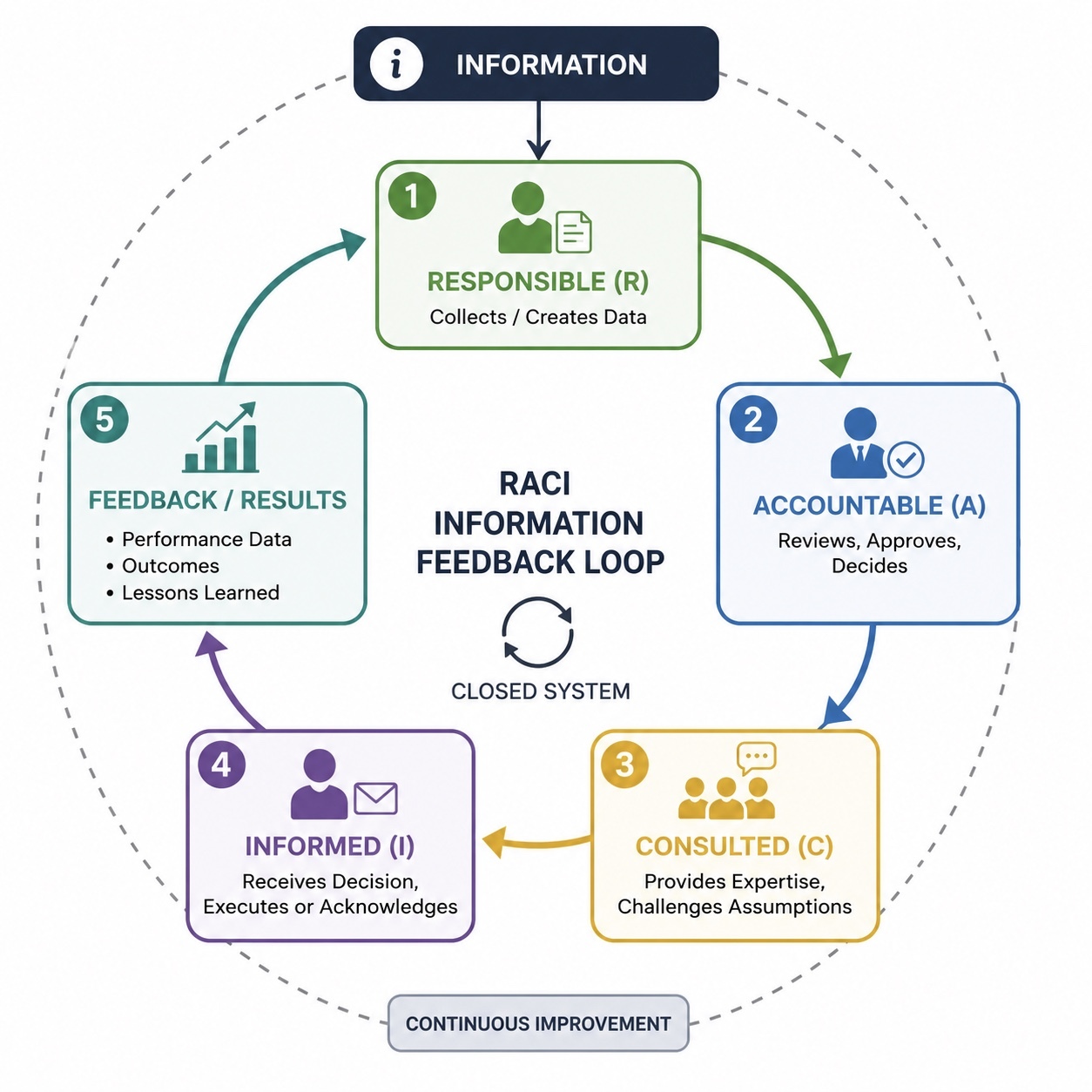
Information loop in RACI matrix
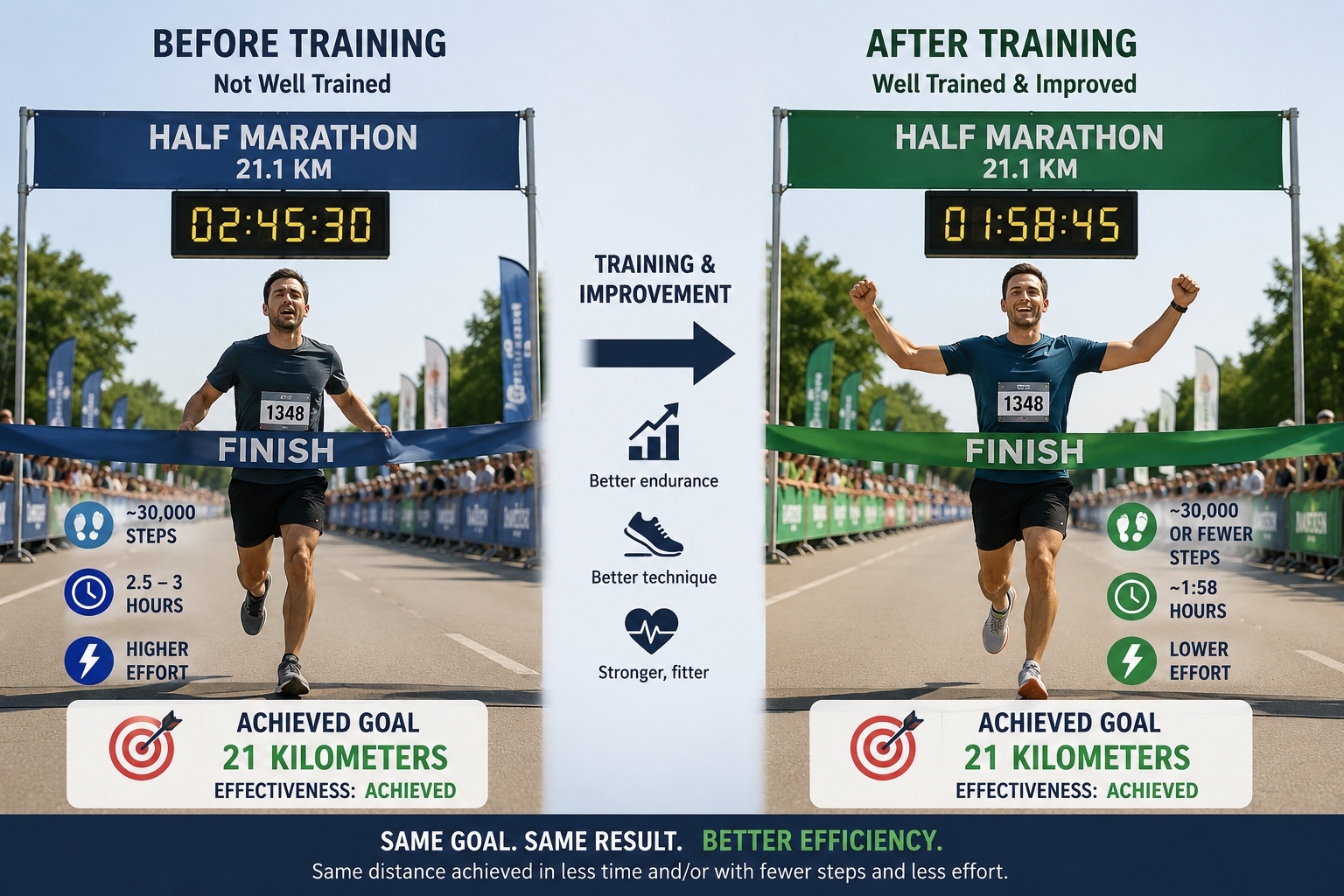
A simple way to understand the difference between effectiveness and efficiency is through the example of running a half marathon.
Imagine a person who runs 21 kilometers. On average, they will take around 30,000 steps to complete the distance. If they are not well trained, they may finish the run in 2.5 to 3 hours.
The effectiveness of the run is measured by the outcome: the runner successfully completed 21 kilometers. The goal was achieved.
Now imagine the same person trains consistently and improves their endurance, running technique, and overall fitness. The destination remains the same—21 kilometers—so the effectiveness is unchanged because the same objective has been achieved.
However, the efficiency has improved. Thanks to better conditioning and optimized performance, the runner can complete the same distance: * in less time, * with less energy expenditure, * and possibly with fewer steps because a more experienced runner often has a longer, more efficient stride.
The outcome is identical, but the resources required to achieve it are reduced.
The Business Parallel
The same principle applies to business processes.
An effective process delivers the intended result—it achieves the business objective.
An efficient process delivers the same result while using fewer resources, such as less time, lower costs, less effort, or fewer process steps.
Continuous improvement in a company should therefore focus not only on being effective—doing the right things—but also on being efficient—doing those things in the best possible way.
In simple terms:
* Effectiveness = achieving the goal.
* Efficiency = achieving the same goal with fewer resources.
Efficiency as example in running
Lead with humility to earn respect, and lead with presence to inspire confidence.
If you do not change, others will change and the market will change as a natural phenomenon . You will be out of the game, loose many opportunities and face significant risks with serious consequences. Change must involve constant improvement.
Those who do not deal with prevention must deal with remediation. Those who do not conduct risk analysis must deal with the consequences.
This is not a call to turn your plan on its head and disregard everything that once worked. It is a system of adding small improvements over time.
It is a holistic review of the plan, intended to evaluate its shortcomings and identify how it can be improved without necessarily changing everything.
You must also be personally open to change, feedback and criticism whenever they arise. These are essential for individual growth.
Find out what motivates people and use it to attract their interest. Common motivators include money, power, status and popularity. Once you understand these motivators, you have a better chance of helping people understand the reasons for change.
A common reason why successful people refuse to change is that they overestimate their strengths and underestimate their weaknesses.
There is a well-known saying: “If it is not broken, do not fix it.” However, sustainable success requires more than changing business tactics. We must also change our own behaviour in order to achieve and retain success.
Change as a process. Do you agree that change is constant? The process has continued since the beginning of time and will continue forever.
The world is changing physically, socially and economically. Even you are changing at this very moment. Change is here to stay.
Change creates problems because something new has emerged. We must decide what to do about it and then implement that decision.
Since it is a new phenomenon or event, we cannot have all the information we might want. Deciding about something new therefore involves uncertainty.
Implementing the decision also involves risk: it might not work as well as expected. Making decisions under uncertainty and implementing them despite risk is a challenge.
We ask ourselves: What should we do in conditions of uncertainty, and should we do it despite the risk?
We therefore perceive a new phenomenon that affects us as a problem. The more change there is, the more problems we may encounter.
Once we make and implement a decision, the process does not end. Every implemented solution creates new circumstances that may require further decisions and improvements.
In any system—whether a business, a team or personal development—progress depends on feedback. Without it, learning is slow, mistakes go unnoticed and growth stagnates.
Feedback loops act as the engine of improvement, turning every action into data, every result into insight and every insight into better decisions.
Positive loops accelerate growth by reinforcing what works. Negative loops correct errors and prevent small issues from becoming major problems.
Together, they form the backbone of continuous improvement. They enable individuals and organisations to adapt, evolve and grow faster than linear effort alone could achieve.
Organisational change requires clear leadership, effective communication and the active involvement of employees.
Do not be afraid to try something new. Never allow past disappointments to stop you from fully pursuing what you want.
#1. Vision.
A compelling vision sets the direction for your efforts. Without a clear vision, it's easy to get lost in the weeds of daily tasks. Your vision is what keeps you going when the going gets tough. It is the guiding star that pulls you forward. It's not just about what you want to achieve in the next 12 weeks, but what you want your life to look like in the next few years. This vision should be clear, compelling, and deeply motivating. This vision will be your driving force, the "why" behind your daily actions.
#2. Planning.
Break down your vision into actionable steps that can be achieved within the 12-week framework. A good plan is your roadmap, detailing what needs to be done and when. Without a plan, your goals remain abstract.
#3. Process Control.
Whether it's a daily checklist, time-blocking, or a project management tool, having systems in place helps you maintain discipline and focus. Systems help remove the guesswork and reduce the mental load of decision-making. They ensure that even on days when you're not feeling particularly motivated, you still take the necessary steps forward. Tip. Identify the areas where you tend to get off track and implement a system to counteract that. For example, if you struggle with time management, try using a timer to work in focused intervals, like the Pomodoro Technique.
#4. Measurement.
Measurement tells you whether you're on track or if adjustments are needed. Without measurement, you're flying blind.
"What gets measured gets improved." Brian P. Moran, Michael Lennington.
#5. Time Use.
This discipline is about being intentional with how you allocate your time. Time is your most precious resource, and how you use it determines your success.
Tip. At the start of each week, identify your top three priorities that align with your 12-week goals. Allocate dedicated time blocks to work on these priorities, and treat this time as non-negotiable. This ensures that you're consistently making progress on what matters most.
"How you spend your time is how you live your life." Brian P. Moran, Michael Lennington.

If you do not analyse the context, you will remain in the same place and gradually decline.