“Turn every piece of data into action. Turn every action into data. Turn every result into insight. Turn every insight into better decisions.” — Medicon motto
Our QMS reflections
Date: 4/8/26
Articles, updates and insights on quality management systems
ISO 9001 defines what a quality management system should achieve, while ISO 9004 provides a broader perspective on how an organization can develop its processes, resources, culture, learning and management to achieve sustained success. Select an ISO 9001 area to see the related ISO 9004 perspective and a practical example of application.
Select a procedure to see which other procedures employees working in that process should be familiar with.
“Turn every piece of data into action. Turn every action into data. Turn every result into insight. Turn every insight into better decisions.” — Medicon motto
“If you possess information and do not share it with others, you will suffocate it.” — Medicon motto
Data is a measure of something.
Information is data placed in context.
Information, when properly managed, becomes knowledge.
Knowledge creates opportunities to become better and more successful.
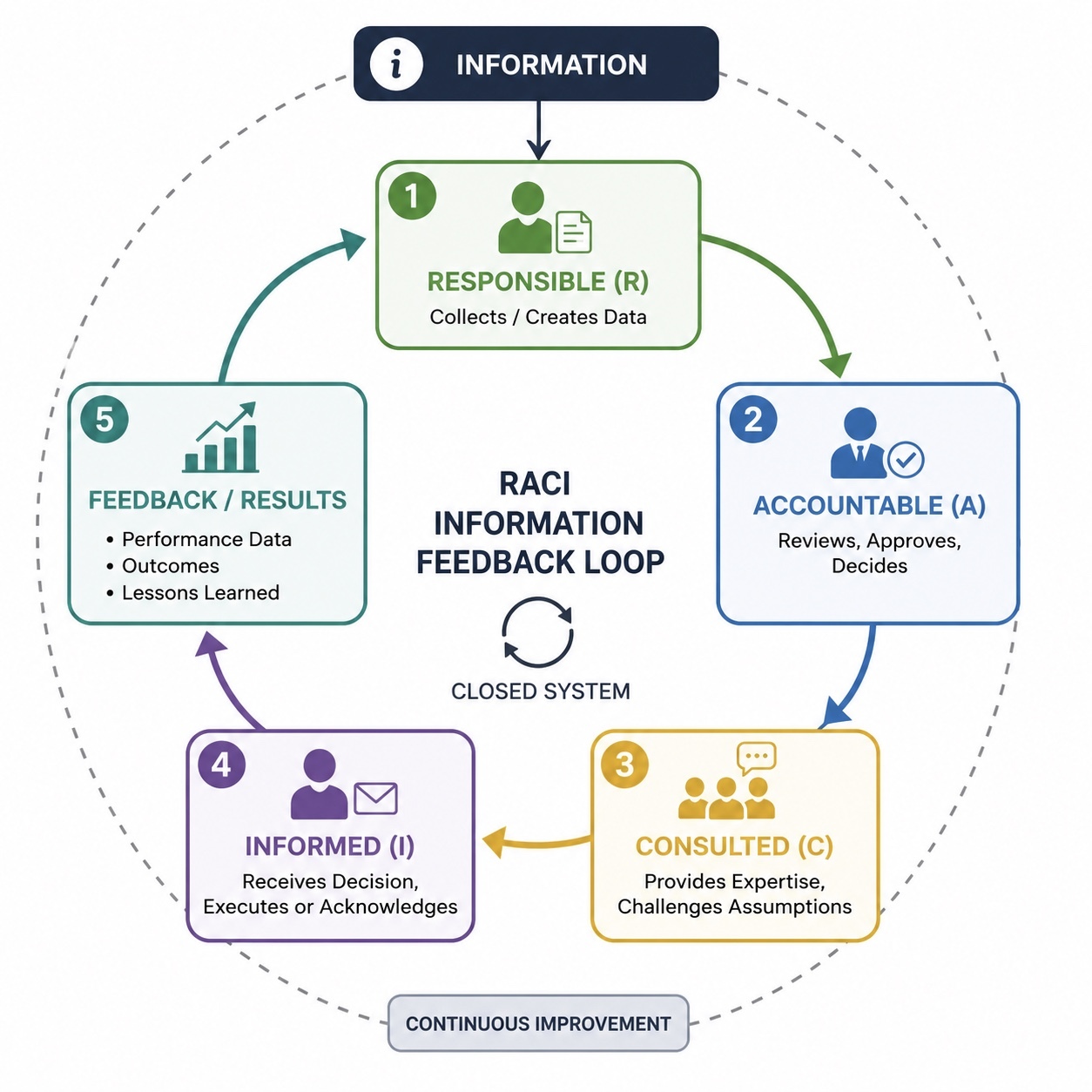
Information loop in the RACI matrix
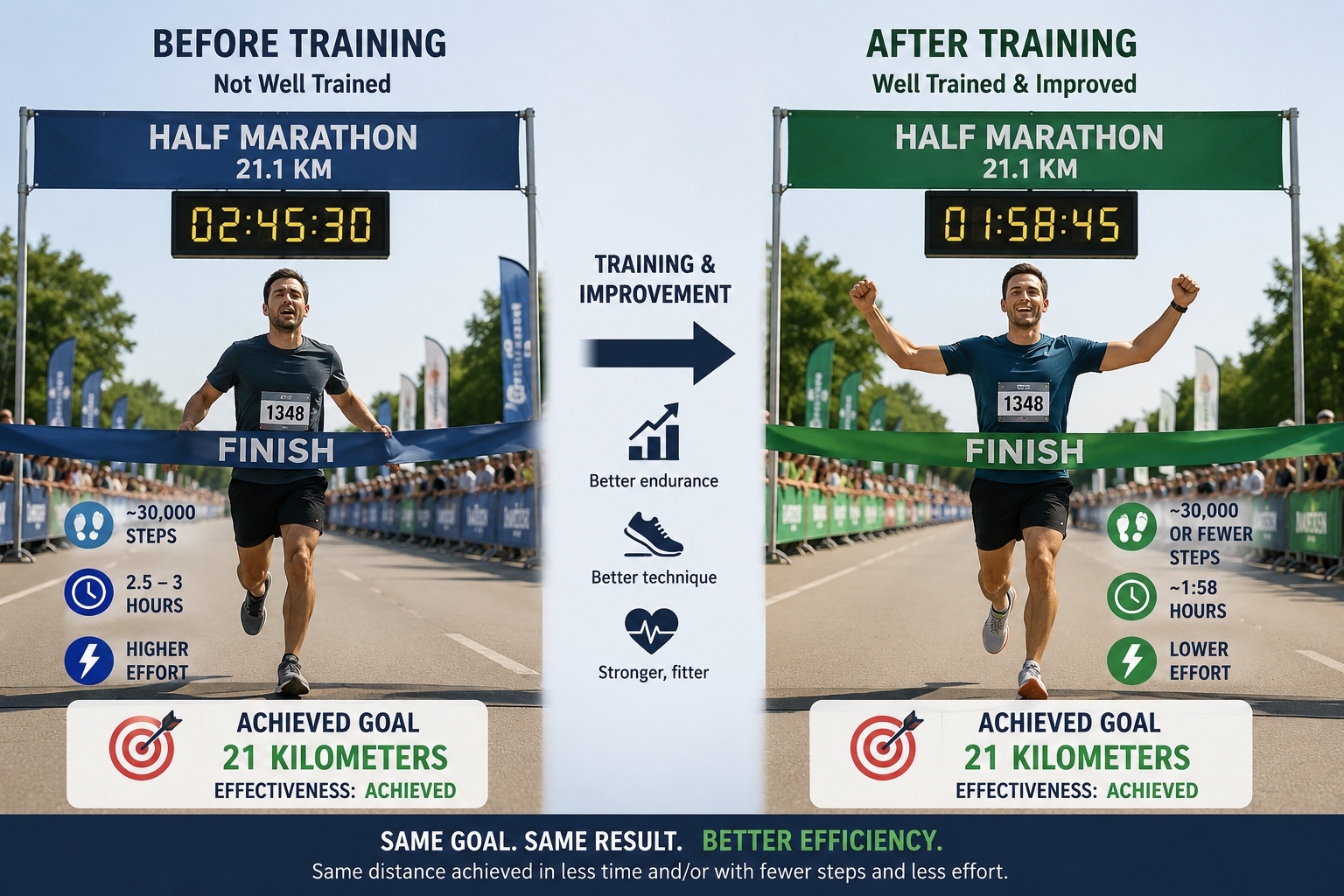
A simple way to understand the difference between effectiveness and efficiency is to use the example of running a half marathon.
Imagine someone running 21 kilometres. They may take around 30,000 steps to cover the distance. If they are not well trained, they may finish the race in approximately 2.5 to 3 hours.
The effectiveness of the run is measured by the outcome: the runner successfully completed 21 kilometres. The objective was achieved.
Now imagine that the same person trains regularly and improves endurance, running technique and overall fitness. The goal remains the same — 21 kilometres. Therefore, the effectiveness remains the same because the same objective is achieved.
Efficiency, however, has improved. With better fitness and optimized performance, the runner can complete the same distance: in less time, with less energy, and possibly with fewer steps.
The outcome is the same, but the resources needed to achieve it have been reduced.
Business parallel
An effective process produces the intended result. An efficient process produces the same result using fewer resources, such as time, cost, effort or process steps.
Effectiveness = achieving the objective. Efficiency = achieving the same objective with fewer resources.
Lead with humility to earn respect, and with presence to inspire confidence.
If we do not change, others certainly will, and the market will inevitably change because change is a natural phenomenon. We will fall out of the game, lose opportunities and face significant risks and serious consequences. Change must include continual improvement.
Those who do not focus on prevention will eventually have to deal with the consequences. Those who do not perform risk analysis will eventually have to face the consequences.
This is not a call to completely overturn your plan or ignore everything that has worked in the past. It is a system of gradually adding small improvements.
It is a comprehensive review of the existing plan to identify weaknesses and determine how it can be improved without necessarily changing everything.
You must personally remain open to change, feedback and criticism whenever they arise. They are necessary for personal development.
Find out what motivates people and use it to attract their interest. Common motivators include money, power, status and popularity. Once you understand these motivators, you have a better chance of helping people understand the reasons for change.
A common reason successful people resist change is that they overestimate their strengths and underestimate their weaknesses.
There is a well-known saying: “If it is not broken, do not fix it.” However, sustained success requires more than changing business tactics. We must also change our own behaviour if we want to achieve and maintain success.
Change as a process. Do you agree that change is constant? The process has existed from the beginning of time and will continue indefinitely.
The world changes physically, socially and economically. You are changing right now. Change is permanent.
Change creates problems because something new has appeared. We must decide what to do and then implement that decision.
Because we are dealing with something new, we cannot have all the information we would ideally want. Decision-making in a new situation therefore involves uncertainty.
Implementing the decision also involves risk. It may not work as well as expected.
We therefore ask: What should we do under conditions of uncertainty, and should we do it despite the risk?
Once a decision is made and implemented, the process does not end. Every implemented solution creates new circumstances that may require new decisions and further improvement.
In every system — whether a business, a team or personal development — progress depends on feedback. Without feedback, learning is slow, mistakes remain unnoticed and development stagnates.
Feedback loops act as an engine of improvement, turning every action into data, every result into insight, and every insight into better decisions.
Positive feedback loops accelerate growth by reinforcing what works. Negative feedback loops correct errors and prevent small problems from becoming large ones.
Together, they form the backbone of continual improvement.
Organizational change requires clear leadership, effective communication, and active employee involvement.
Do not be afraid to try something new. Do not let previous disappointments prevent you from fully pursuing what you want.
#1. Vision. A compelling vision determines the direction of your efforts. Without a clear vision, it is easy to become lost in everyday tasks. Your vision is the guiding star that keeps pulling you forward.
#2. Planning. Break your vision into concrete actions that can be achieved within a 12-week period. A good plan is your roadmap. It clearly defines what needs to be done and when.
#3. Process control. Daily checklists, time blocking or project management tools help maintain discipline and focus. Systems remove guesswork and reduce the mental burden of decision-making.
#4. Measurement. Measurement tells you whether you are on track or whether adjustments are needed. Without measurement, you are moving blindly.
“What gets measured gets improved.” — Brian P. Moran, Michael Lennington
#5. Use of time. Time is your most valuable resource. How you use it determines your success.
Tip: At the beginning of every week, identify the three most important priorities aligned with your 12-week objectives. Reserve specific time blocks for those priorities and treat that time as non-negotiable.
“The way you spend your time determines the way you live your life.” — Brian P. Moran, Michael Lennington

If you do not analyze your context, you will remain in the same place and gradually fall behind.
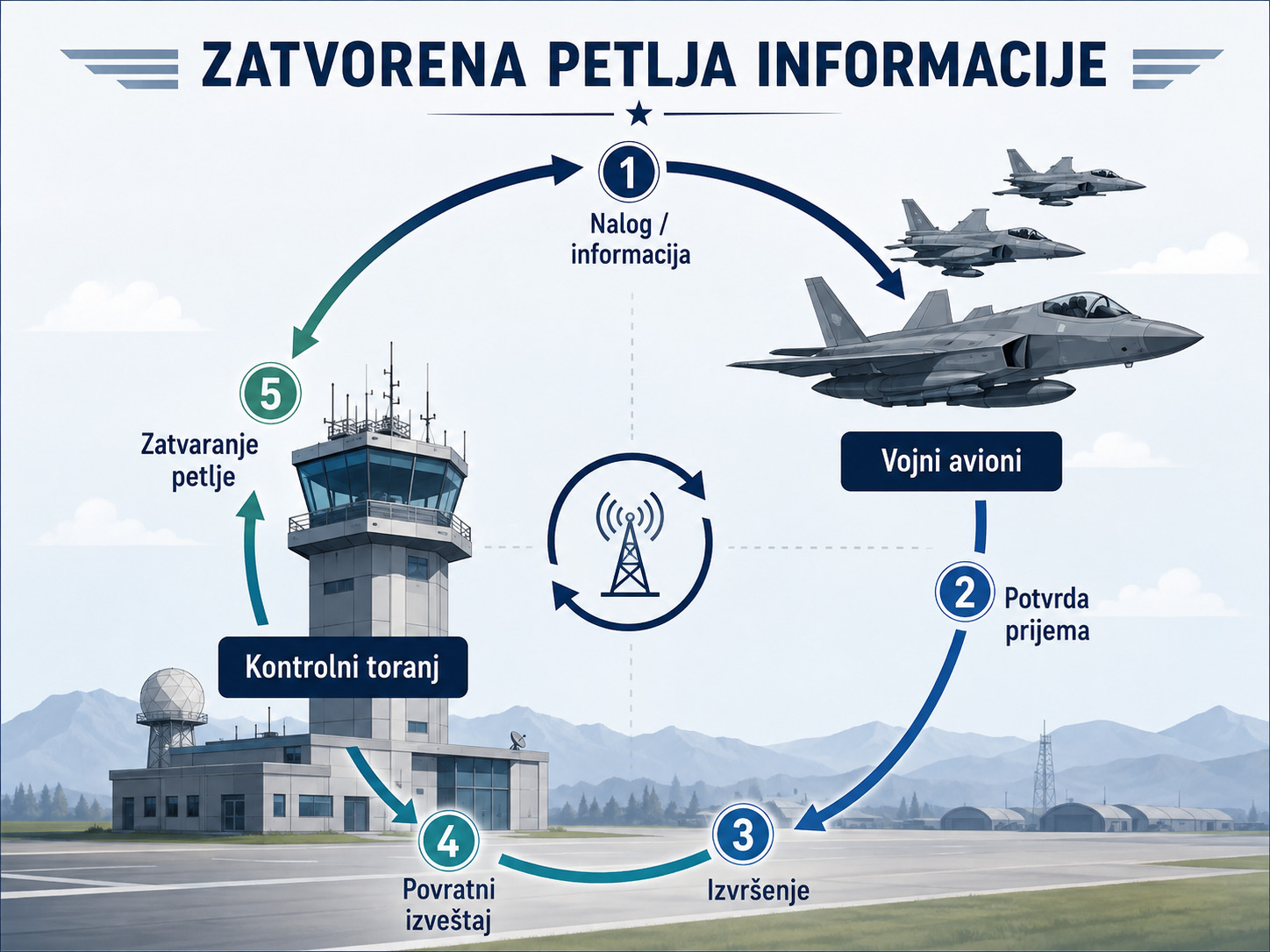
“Communication is complete only when the information returns to the source in the form of confirmation of understanding and execution.”